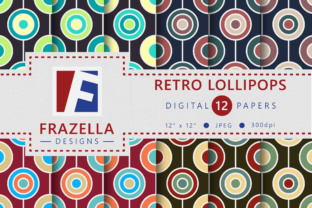
Retro Lollipops Vintage Digital Paper Collection
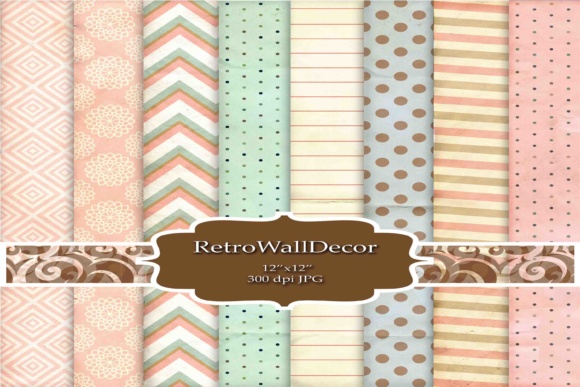
Imagine opening a digital drawer filled with candy-colored swirls, hand-drawn lollipop motifs, faded pastel textures, and subtle halftone patterns—all scanned from authentic mid-century design sources. That’s the essence of the Retro Lollipops Vintage Digital Paper Collection: a thoughtfully curated set of 12 high-resolution JPG files designed to evoke nostalgia without sacrificing modern usability.
What It Is—And What It Isn’t
This isn’t clipart. It’s not a subscription service or a sprawling bundle of hundreds of files. It’s one focused, cohesive set—12 distinct vintage-inspired digital papers, delivered as JPGs at 300 DPI resolution. Each pattern balances authenticity (think soft grain, gentle color shifts, and intentional imperfections) with clean digital readiness. No layers, no PSD files—but also no licensing ambiguity: these are for personal *and* commercial use, right out of the download.
For the Beginner Designer or Hobbyist
If you’ve just started experimenting with Canva, Cricut Design Space, or free tools like GIMP, simplicity matters. The Retro Lollipops Vintage Digital Paper Collection works instantly—you don’t need to unzip layered files, adjust blending modes, or troubleshoot compatibility. Drag one into your project, resize it, and it holds up beautifully whether you’re printing a birthday card on home printer paper or exporting a social media graphic. There’s no learning curve built into the files themselves—just clarity and charm.
For Educators and Content Creators
Teachers designing classroom posters, homeschool planners, or printable activity sheets often need visuals that feel warm, engaging, and age-appropriate—not sterile or overly trendy. These papers add subtle personality to flashcards, reading logs, or behavior charts without overwhelming young learners. A third-grade teacher might use the “mint swirl” paper as a background for a vocabulary worksheet; a language tutor could layer text over the “candy stripe” design for flashcards that stand out in a digital lesson slide.
For Small Business Owners and Makers
Handmade jewelry sellers, indie stationery brands, or local bakery owners building their own packaging templates benefit from consistency and speed. Because all 12 papers share a unified palette (dusty rose, butter yellow, sky blue, mint, and cream), mixing them across labels, tags, and social posts creates instant brand cohesion—even without a formal style guide. One small-batch candle maker used the “vintage dot grid” paper as a background for product photography overlays, giving her Instagram feed a relaxed, curated look that customers associated with care and craft.
For Freelance Designers and Marketers
When time is tight and clients request “retro but not kitschy,” having a vetted, ready-to-use asset saves hours of moodboarding, sourcing, or custom illustration. These papers hold up under typography, scale predictably, and avoid the pixelation or color banding common in low-res free downloads. A freelance email designer recently embedded one as a subtle background texture behind a newsletter CTA button—adding visual interest without competing with the message.
What You’re Really Evaluating
Choosing digital paper isn’t just about aesthetics. It’s about alignment with your real-world workflow:
- Ease of use: JPGs open anywhere—no special software required. Ideal if you toggle between mobile apps, web tools, and desktop programs.
- Quality & reliability: At 300 DPI, these scale cleanly for print projects like greeting cards or mini-zines—even when enlarged to full-page layouts.
- Creative flexibility: While the theme is cohesive, the 12 designs vary meaningfully: some are dense (great for backgrounds), others are airy or linear (better for borders or subtle accents).
- Commercial safety: Clear usage rights mean you can apply them to client work, sell printed goods, or license digital templates—without digging through fine print.
- Long-term usefulness: Unlike trend-driven assets that date quickly, retro palettes and analog textures tend to age gracefully. You’ll likely reach for these again in six months—or two years—without second-guessing their relevance.
Real Projects, Real Decisions
A freelance illustrator building a printable planner kit chose three papers from the collection—one for cover pages, one for weekly spreads, and one for decorative dividers. She didn’t need every file; she needed three that worked together, loaded fast, and printed crisply on matte cardstock.
A nonprofit communications manager used the “candy stripe” paper as a consistent header background across a series of donor thank-you emails. It added warmth without requiring extra design time—and stayed on-brand with their mission’s emphasis on joy and accessibility.
A parent organizing a child’s birthday party downloaded the set, printed four designs onto sticker paper, and cut them into custom labels for goodie bags. No design skills needed—just a printer, scissors, and a theme that felt joyful and handmade.
Does It Match Your Needs?
Ask yourself:
- Are you working on something that benefits from tactile, nostalgic warmth—not sleek minimalism or futuristic polish?
- Do you prefer straightforward files (JPGs) over complex formats that require specific software or technical know-how?
- Is consistency across multiple uses important—like matching social graphics, printables, and physical products?
- Do you value clear usage terms so you can confidently apply these to client work, small business materials, or shared classroom resources?
If yes to most of those, the Retro Lollipops Vintage Digital Paper Collection fits naturally into your toolkit—not as a novelty, but as reliable, expressive infrastructure.
One Set, Many Starting Points
You don’t need to be a “designer” to use these well. You just need a project where color, texture, and mood matter. Whether you’re drafting a blog post header, prepping a workshop handout, designing a baby shower invitation, or building a digital scrapbook page—the same 12 files adapt because they were made to support *your* intent, not dictate it.
There’s no pressure to use them all. No expectation to master advanced techniques. Just 12 thoughtful surfaces—ready when inspiration (or deadline) strikes.