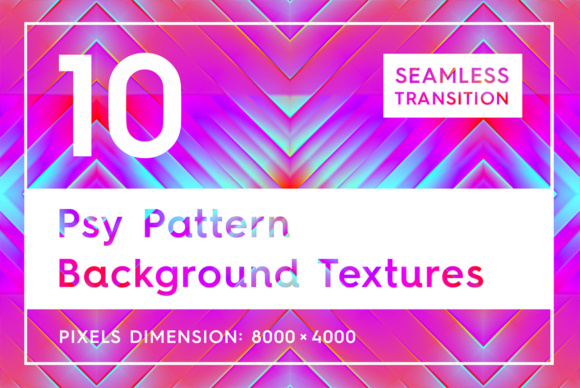
10 Psy Pattern Background Textures: A Practical Evaluation for Digital Artists and Designers
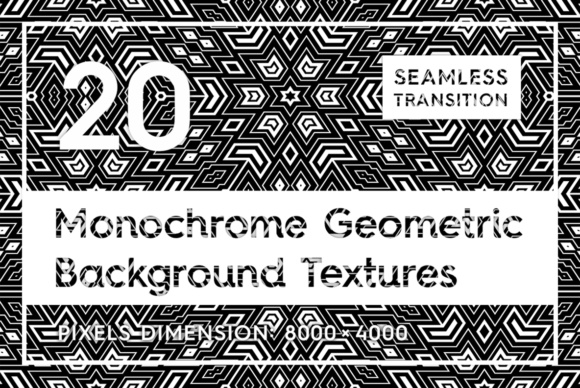
The 10 Psy Pattern Background Textures pack is a curated collection of ten high-resolution, seamless JPEG files—each featuring a distinct, modern psychedelic pattern. Designed for versatility, these textures are delivered at 8000 × 4000 pixels, offering substantial detail and scalability across digital applications. Unlike generative or editable vector assets, this set delivers ready-to-use raster backgrounds with consistent color variation, random-styled motifs, and intentional visual rhythm.
Designers and developers often seek background textures that balance aesthetic impact with technical reliability. The 10 Psy Pattern Background Textures respond to that need by providing fully rendered, production-ready files—not templates or source layers. Each texture is non-repeating in perceptual structure (though technically seamless), avoiding the mechanical repetition sometimes found in tiled patterns. This makes them especially useful where visual interest must remain engaging at scale—such as full-screen website headers, mobile app launch screens, or print-ready poster backgrounds.
Why Consider This Pack?
Interest in the 10 Psy Pattern Background Textures typically arises from practical workflow needs rather than stylistic novelty alone. For example, a UI designer building a music streaming application may require bold, energetic backdrops that reinforce brand identity without competing with interface elements. Similarly, a marketing team producing event flyers for a wellness or electronic music festival might need vibrant, contemporary textures that convey movement and depth while remaining legible under overlaid text.
These textures also serve users who lack time or expertise to generate custom patterns from scratch. Creating high-fidelity, seamless psychedelic motifs demands familiarity with procedural generation tools, color theory, and export optimization—skills not uniformly distributed across creative teams. The 10 Psy Pattern Background Textures offer a shortcut: predictable quality, standardized dimensions, and immediate compatibility with common design software and development environments.
Key Benefits and Realistic Expectations
The primary benefit lies in efficiency and consistency. All ten files share the same resolution (8000 × 4000 px), color profile (RGB), and format (JPEG), reducing integration friction. Their seamless tiling capability supports responsive layouts and dynamic cropping—important for adaptive web design or multi-format advertising campaigns. Additionally, the variety in style—ranging from geometric fractal derivatives to fluid organic waveforms—provides built-in options for mood matching without requiring external sourcing.
However, expectations should align with the product’s scope. These are static raster assets, not editable source files. Users cannot adjust individual pattern elements, modify colors via swatches, or re-render at alternate scales without potential interpolation artifacts. While the resolution supports large-format printing (e.g., posters up to ~27" × 13" at 300 DPI), extreme enlargement beyond native dimensions may reveal pixel-level detail limitations. Also, because each file is JPEG-compressed, they do not support transparency—making them unsuitable for layered compositing without additional masking work.
When This Pack Is a Strong Fit
The 10 Psy Pattern Background Textures are particularly well-suited for projects where:
- Speed and standardization matter more than customization. Teams under deadline pressure—such as agencies producing seasonal social media banners or indie game developers prototyping menu interfaces—can integrate these textures rapidly without iterative refinement.
- Visual cohesion across multiple touchpoints is required. A single campaign spanning website hero sections, email headers, and physical postcards benefits from a unified textural language—something this pack delivers through deliberate stylistic diversity within a shared aesthetic framework.
- Target audiences respond positively to expressive, contemporary visuals. Applications in entertainment, wellness tech, creative education, or youth-oriented branding often gain resonance from dynamic, non-corporate backgrounds—precisely the domain these textures occupy.
When Alternatives May Be More Appropriate
This pack is less optimal when flexibility or long-term adaptability is essential. For instance:
- If your project requires frequent color adjustments—for accessibility compliance, seasonal rebranding, or A/B testing—vector-based pattern libraries or parametric tools (like Adobe Substance Designer or CSS-based SVG patterns) allow non-destructive edits that JPEGs cannot support.
- If you’re developing a design system with strict token-based theming, static JPEGs introduce versioning complexity. In such cases, generating patterns algorithmically ensures consistency across light/dark modes and component states.
- If transparency or alpha-channel control is needed—for overlay effects, parallax scrolling, or motion graphics—the absence of PNG or WebP variants limits utility. Users would need to manually extract or simulate transparency, adding overhead.
Practical Decision-Making Insights
Evaluating whether the 10 Psy Pattern Background Textures meet your needs begins with clarifying your use case hierarchy. Ask yourself:
- Is resolution the limiting factor? If your deliverables rarely exceed 1920 × 1080 px—or if you’re targeting only small-screen apps—the 8000 × 4000 px size offers headroom but no functional advantage. Conversely, if you regularly output for digital billboards or large-format prints, that resolution becomes a tangible asset.
- How many unique background variations does your project actually require? Ten is substantial, but not infinite. Review the preview samples critically: do the styles cover the emotional range you need (e.g., calm vs. intense, structured vs. chaotic)? If most feel too similar or miss your tonal target, even high quality won’t resolve the mismatch.
- What’s your maintenance tolerance? Raster textures don’t scale infinitely, nor do they adapt to future platform requirements (e.g., variable refresh rate displays or HDR output). If your product lifecycle spans years, consider whether fixed assets will age gracefully—or whether modular, code-driven alternatives better serve longevity.
Finally, assess integration effort. Because these are JPEGs, they work out-of-the-box in virtually any image-aware environment—from Figma and Photoshop to HTML/CSS and Unity. No plugin, license key, or rendering engine is required. That simplicity has real value—but only if it aligns with your team’s technical constraints and goals.
Conclusion
The 10 Psy Pattern Background Textures represent a focused solution for designers and developers needing dependable, visually distinctive backgrounds without investing in custom pattern creation. They excel in scenarios prioritizing speed, coherence, and expressive impact over deep editability or cross-platform adaptability. As with any digital asset, their suitability depends less on inherent quality—which is objectively high—and more on alignment with your specific project parameters, technical stack, and long-term maintenance strategy. Evaluating them against concrete use cases—not abstract appeal—leads to more confident, effective decisions.