Christmas Seamless Pattern: A Practical Guide for Designers and Crafters
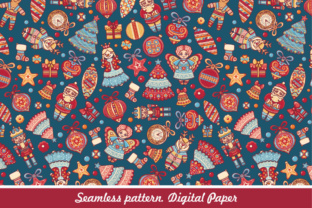
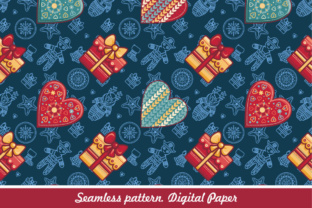
A Christmas seamless pattern is a digital design asset—typically a tileable graphic element—that repeats infinitely without visible seams or breaks. Unlike standalone illustrations or holiday-themed photos, it’s built to fill any surface uniformly: wrapping paper, greeting card backgrounds, fabric mockups, web headers, or printable stationery. Its defining trait isn’t just festive imagery (think holly, snowflakes, ornaments, or minimalist Nordic motifs), but structural continuity: the left edge aligns precisely with the right, and the top with the bottom. This technical quality enables scalability and flexibility across physical and digital outputs.
How It Differs From Other Holiday Design Resources
Not all Christmas-themed graphics function the same way. A high-resolution JPG photo of a decorated tree serves well as a hero image—but won’t tile cleanly across an A4 sheet without awkward repetition or visible borders. Similarly, a hand-drawn SVG icon set offers modularity but requires manual arrangement and spacing to achieve a cohesive background. In contrast, a Christmas seamless pattern arrives pre-optimized for repetition. Its construction—whether vector-based (EPS) or raster (JPG)—is intentional, not incidental.
This distinction matters most when outputting at scale. For example, someone designing custom gift wrap needs predictable, repeatable coverage across varying roll widths. A craft business producing branded tote bags must ensure the motif aligns correctly across curved seams and folds. A social media manager building a cohesive December content calendar may want consistent visual rhythm across posts—something a seamless pattern delivers without manual tiling or alignment work.
EPS vs. JPG: Choosing the Right Format
The file format significantly affects how you can use a Christmas seamless pattern—and what limits you’ll encounter.
- EPS (Encapsulated PostScript): A vector format that preserves infinite scalability and editable elements. With compatible software (e.g., Adobe Illustrator), you can adjust individual colors, isolate motifs, resize without pixelation, or even reposition repeating units before exporting. Ideal if you anticipate frequent revisions, need CMYK-ready files for print, or plan to adapt the pattern for different brand palettes.
- JPG: A raster format delivered at high resolution (often 300+ DPI). It’s universally openable, fast to preview, and reliable for immediate use in layout tools like Canva, InDesign, or Photoshop. However, color changes require layer masking or global adjustments—not per-element edits—and scaling beyond original dimensions risks blurriness. Best suited for one-off projects where fidelity and speed outweigh customization needs.
Neither format is inherently superior—it depends on your workflow, tools, and intended output. If you’re preparing files for a local print shop, EPS gives more control over ink density and spot colors. If you’re a teacher creating classroom decorations in Google Slides, a high-res JPG saves time and avoids compatibility friction.
When a Christmas Seamless Pattern Fits—And When It Doesn’t
A Christmas seamless pattern excels in scenarios demanding consistency, efficiency, and adaptability across surfaces. Consider these real-world fits:
- Print-on-demand creators using platforms like Printful or Redbubble benefit from seamless patterns because they auto-tile across product templates (mugs, phone cases, pillows) without manual resizing or cropping.
- Small-batch stationery designers who produce limited-run cards or stickers often pair a single Christmas seamless pattern with layered typography or foil accents—reducing design time while maintaining visual cohesion.
- Digital marketers building email campaigns or landing pages can apply the same pattern as a subtle background texture behind text blocks, reinforcing seasonal tone without overwhelming readability.
Conversely, a Christmas seamless pattern may fall short in situations requiring strong focal hierarchy or narrative composition. A children’s book cover needs a central character or scene—not repetition. A logo mark demands singularity and memorability, not tiling logic. Likewise, if your project calls for photorealistic depth (e.g., a snowy forest with atmospheric perspective), a flat, repeating pattern lacks the spatial variation needed for immersion.
Practical Tradeoffs to Weigh
Working with Christmas seamless patterns involves realistic tradeoffs—not just technical ones, but creative and logistical ones too.
Customization vs. convenience: While EPS files allow deep editing, doing so demands familiarity with vector tools. Someone comfortable in Procreate or Canva may find the learning curve unnecessary if their goal is simply to add a festive backdrop to a PDF invitation. Conversely, limiting yourself to JPGs means accepting the designer’s original color balance—even if it clashes with your brand’s teal-and-gold scheme.
Resolution and context: A “high-res” JPG sounds reassuring—but resolution only matters relative to output size and viewing distance. A 5000×5000 px file looks crisp on a 24″ wall calendar but may load slowly in a web email template. Meanwhile, an EPS file remains sharp at any size, yet requires proper export settings (e.g., embedding fonts, flattening transparencies) before sending to commercial printers.
Licensing clarity: Not all Christmas seamless patterns include commercial-use rights by default. Some are labeled “personal use only,” restricting resale of derivative products. Always verify license terms before integrating into client work or merchandise—especially when patterns include stylized interpretations of copyrighted characters or trademarks.
Comparing Approaches: Pattern vs. Alternative Solutions
Before selecting a Christmas seamless pattern, consider how it stacks up against other common approaches:
- Hand-drawn or scanned textures: Offer organic charm and uniqueness but rarely tile without visible joins unless digitally refined—a time-intensive process many lack the tools or expertise to execute reliably.
- AI-generated patterns: Can produce novel motifs quickly, but often lack precise seam alignment, consistent stroke weight, or stylistic cohesion across repeats. Post-generation cleanup is usually required.
- Stock photo overlays or brushes: Provide flexibility for layering but don’t guarantee uniform density or rhythm—leading to uneven visual weight across large areas.
- Custom commissioning: Delivers full ownership and tailored aesthetics but carries higher cost and longer turnaround than off-the-shelf downloads.
A Christmas seamless pattern sits between those poles: more dependable than AI or texture scans, more accessible than commissioning, and more purpose-built than generic stock assets.
Making an Informed Choice
Ask yourself three questions before downloading or purchasing:
- What’s my primary output? If it’s printed fabric, packaging, or large-format signage, prioritize EPS with CMYK support and PMS-ready swatches. For digital-only use (social banners, email headers), a high-res JPG with sRGB color profile is often sufficient.
- How much editing do I realistically expect to do? If you’ll change colors weekly or adapt the pattern for multiple product lines, EPS saves hours long-term. If you’re applying it once and moving on, JPG reduces setup friction.
- Do I need assurance of licensing scope? Look for clear documentation—not just “commercial use allowed,” but whether it covers POD platforms, resale of physical goods, or inclusion in client deliverables.
There’s no universal “best” Christmas seamless pattern. The right one matches your tools, timeline, scale, and tolerance for iteration. What makes it valuable isn’t novelty alone, but reliability: knowing that when you stretch it across a 36″ banner or shrink it into a 128×128 px favicon tile, the integrity holds.